How Neighborhood Turnover Rate Affects Hardscape Demand
Low turnover rates are redirecting hardscape demand toward long-tenure homeowners.
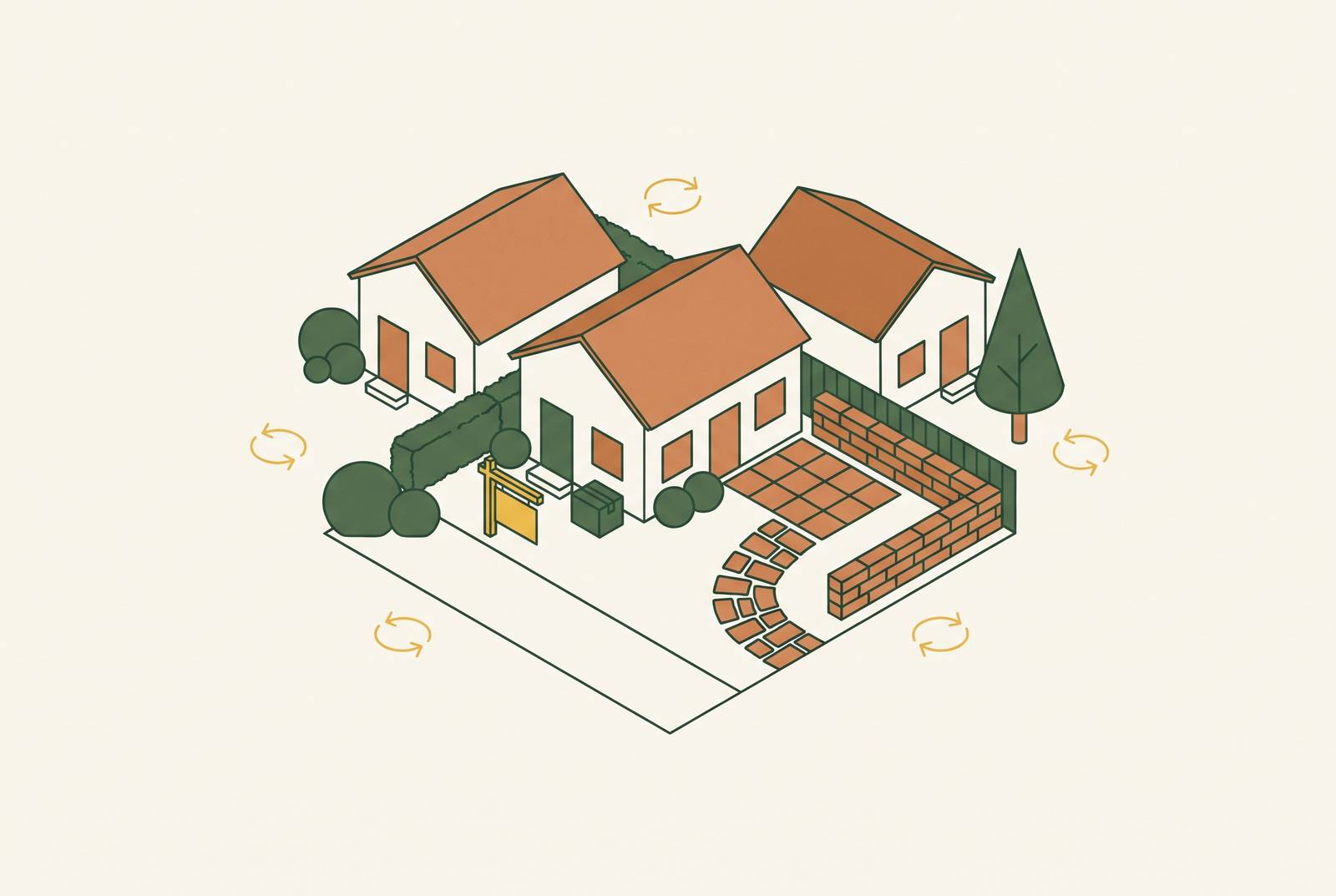
Neighborhood turnover once gave hardscape contractors a clear signal of where buyers would spend. With residential turnover at a 30-year low, that signal is missing much of the opportunity. Demand is shifting toward long-tenure homeowners improving the homes they intend to keep. Contractors who target those households, rather than wait for sales to recover, are better positioned to win the work.
How the turnover-rate floor changed who is spending on hardscape
A home purchase gives outdoor projects a deadline. The new owner wants a patio that fits the family, a better walkway, or a driveway that makes the property feel finished. NAHB’s analysis of Consumer Expenditure Survey data from 2020–2023 found that first-year buyers of existing homes spend roughly twice what non-moving homeowners spend on appliances, furnishings, and property alterations and repairs combined. But hardscape fits directly into the customization that follows a purchase, and deferred work extends the burst into the second and third years.
People who buy newly built homes spend even more. Their customization projects include patios, walkways, driveways, fences, and pools, making new ownership a useful signal for contractors looking for customers. The transaction starts the spending cycle. When fewer homes sell, fewer households start that spending cycle, even if they still want a better outdoor space.
Just 28 out of every 1,000 U.S. homes changed hands in the first nine months of 2025, the lowest turnover rate in at least 30 years. Affordability pressure and economic uncertainty held back transactions. The FHFA estimated that mortgage lock-in prevented millions of home sales between 2022 Q2 and 2024 Q2. Owners holding low mortgage rates have a strong reason to stay, so the traditional pool of transaction-driven hardscape leads has shrunk. Recent sales still point to people who might hire a contractor, but they show too little of the work homeowners in a neighborhood may want done.
Where suppressed transactions redirected the spending
Instead of asking what a newly purchased property needs, owners ask what would make their current home better to live in. A homeowner who is not moving can still want a more attractive yard, more usable outdoor space, or an improvement that adds home value.
HIRI’s 2025 Project Decision Study identified improving aesthetics, improving comfort and livability, and increasing home value as the top motivations for landscape and hardscape projects. None requires a sale to happen first. Those motivations point toward the owner who has decided the current property is worth improving.
The spending forecasts back that shift, though they give no assurance that every contractor will have a full schedule. Homeowners spent hundreds of billions of dollars on improvements and repairs in 2025. The Joint Center for Housing Studies projected continued growth by the end of 2026. The Freedonia Group forecasts U.S. hardscaping product demand to reach $5.1 billion in 2028, with residential projects accounting for the majority of absolute value gains. Its landscaping products report says the tight housing market is driving demand by pushing owners to improve the homes they live in, including their outdoor spaces.
The opportunity has moved. But to reach it, a contractor needs to know which unsold homes are most likely to bring in work. Contractors need to identify neighborhoods that combine a reason to improve with the means and intention to stay.
The neighborhood profiles where invest-in-place demand is actually concentrating
For contractors choosing ZIP codes for door hangers, direct mail, or Google geo-targeting, established, equity-rich neighborhoods are a strong starting point. Low recent sales relative to the housing stock can indicate long ownership tenures. In those areas, original outdoor installations may be aging, unattractive, or too small for how the family now uses the space. Equity strengthens the profile because homeowners with substantial accumulated equity are more likely to fund discretionary improvements. Low turnover alone is not enough to prioritize an area.
In established neighborhoods, households whose members are retired or near retirement are especially likely to want this work. They have time to enjoy outdoor spaces and reasons to improve daily livability. These households tend to cluster in established suburban neighborhoods with older housing stock, where the outdoor space may also be ready for an upgrade. Freedonia identifies strong opportunities among homeowners who see their yards as livable space and want to extend the outdoor season. That preference fits the long-tenure, equity-rich suburban customer more closely than a recent-sale filter would suggest.
Subdivisions several years past their initial build offer a distinct opportunity. The original buyers have lived through a full outdoor cycle, builder-grade hardscape is showing age, and accumulated equity can support upgrades. These leads represent a later wave of demand from residents who now know how they want to use the property.
Mortgage lock-in can sharpen the targeting across these profiles. Local mortgage data and county transfer records can identify concentrations of owners who purchased or refinanced at historically low rates between 2020 and 2022. Those records should be combined with tenure, equity, and installation age. A busy resale neighborhood produces visible transaction events. A stable neighborhood requires prospecting that finds the improvement need without waiting for a sale.
Why hardscape specifically benefits from the invest-in-place shift more than other trades
Hardscape offers something a stay-put homeowner can use for years. Its permanence suits an owner who has decided to commit to the property. A patio or walkway is not just a finishing touch after a purchase. It changes how the existing home works for the people already living there, which aligns closely with comfort and livability, the second-ranked motivation in HIRI’s study.
Home value provides another reason to act. The NAR reports full cost recovery for the average overall landscape upgrade. That finding applies to the broader landscape project. Even with that distinction, it speaks to owners who want better outdoor space without dismissing the effect on equity. They do not have to be selling soon to care about what an improvement is worth.
Mordor Intelligence identifies outdoor living wellness spaces as a short-term demand driver concentrated in affluent residential clusters. Those spaces include pergolas, shaded entertainment zones, and edible plantings. The common thread is enjoyment at home. That makes hardscape a good fit for owners who stay for years, while slower sales give owners less reason to hire for HVAC, roofing, and remodeling work tied to inspections or getting a home ready to sell.
The project economics add to the appeal. Design-build and hardscape services can produce margins roughly double or triple those of maintenance work. That gives contractors a reason to pursue the right invest-in-place jobs as transaction leads decline. The homeowner’s commitment and the contractor’s project mix can point in the same direction.
The labor constraint that caps how much of this demand contractors can actually capture
The binding constraint is the capacity to complete booked work. In the current labor environment, the amount contractors can deliver is lower than the demand signal may suggest. More prospecting without enough crew capacity can turn an opportunity into a scheduling problem.
This changes how growth should be pursued. Contractors should prospect selectively for the highest-margin, highest-value invest-in-place jobs while building the crew pipeline in parallel. At the same time, stopping prospecting altogether gives up the chance to improve the mix of work.
A contractor with limited crew availability needs more than a larger pile of inquiries. The purpose of filtering for tenure, equity, and aging hardscape is to find work worth committing that capacity to. Marketing success therefore has to be judged against jobs the business can estimate, sell, and complete.
How contractors are converting invest-in-place neighborhood demand into signed work
To turn that selective prospecting into signed work, contractors need both proactive outreach and consistent lead handling. Long-tenure homeowners are not always searching for a contractor yet. Direct mail can reach them before they start looking, using lists filtered by the age of the home, how long its owners have lived there, and how much equity they have. Meta Ads can also reach homeowners before they start looking. These channels fit a market where the improvement need exists without a transaction announcing it.
Search channels handle the next part of the decision. Google Business Profile is the highest-leverage free asset for local visibility, while dedicated service-plus-city SEO pages capture searches such as “patio contractor [city].” Google Local Service Ads provide verified placement. These tools do different jobs, so they work best as a connected channel mix.
The response after an inquiry is just as important. A family-owned Dallas-Fort Worth HVAC firm had a marketing manager handling lead intake between jobs and a low website-to-booked-call conversion rate. After it implemented a multi-part automated response system, qualified leads and revenue from new leads both roughly doubled within months. The HVAC case illustrates the intake problem that also faces hardscape contractors receiving quote requests after hours.
Maple Street HVAC also used automation to miss a smaller share of calls and cut the average time it took to respond. AI-powered response and follow-up systems can handle first contact at a fraction of the cost of a human representative per engagement. That leaves more human capacity for estimation and closing, where craft and judgment are needed. Automation serves the handoff. It does not replace the work of assessing a project.
For a hardscape contractor, the practical move is to route these channels through a unified lead-handling system. People who respond to targeted mail should get a reply even after hours, and those who get in touch through local search should get the same steady follow-up as paid leads. Fast response cannot fix poor neighborhood targeting. But without it, the effort spent finding the right stay-put homeowner can fail before an estimate is arranged.
What contractors who wait for turnover to recover will miss
Transaction-linked renovation demand is expected to remain below historic norms through 2026–2027. A contractor that keeps organizing prospecting around recent sales, new listings, and transaction activity remains dependent on a smaller flow of those events. Meanwhile, other contractors can find ways to reach homeowners who have no plans to move.
The stay-put preference extends beyond the immediate rate problem. A majority of homeowners plan to remain in their current homes for more than a decade and plan projects accordingly. Personalization has also risen most among home improvement motivations since 2022. For hardscape, those wishes favor permanent outdoor improvements built to suit the people who live there now.
The advantage available now is knowing the territory differently. Most contractors still judge neighborhoods by signs of home sales rather than how long owners have lived there, how much equity they have built up, and how old the existing hardscape is. Contractors who learn those things about a neighborhood can reach homeowners who want work done but would be missed by a recent-sales list. Pairing it with fast, consistent lead response creates a prospecting system suited to long ownership periods.
A turnover recovery would make transaction leads useful again in greater numbers. It would not erase the value of knowing which settled households are ready to invest.