New Construction Homeowner Demand for Hardscape Upgrades
New construction buyers are ready to spend on hardscape before anyone else shows up.
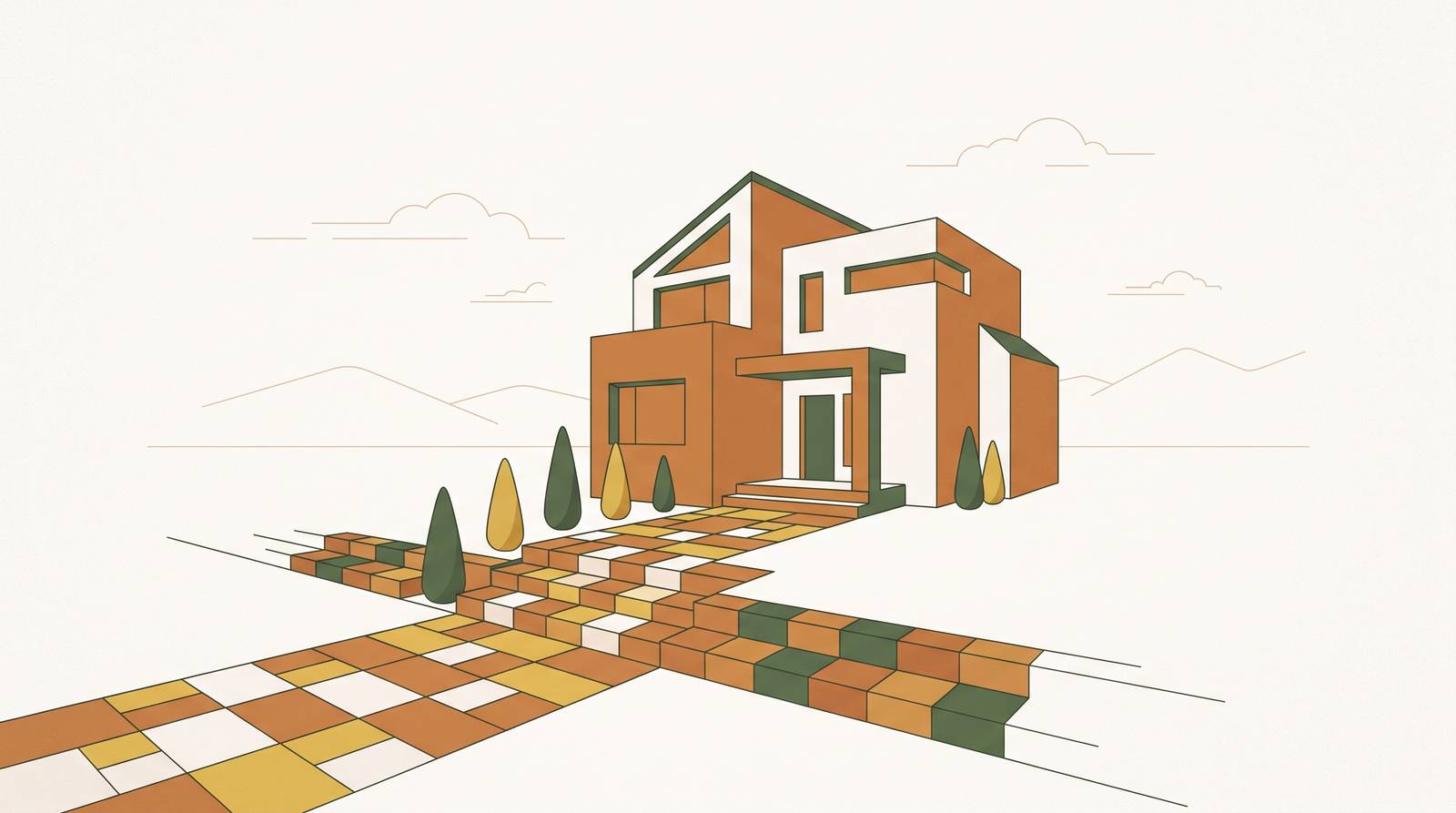
New construction buyers are the best lead in hardscape right now, and almost nobody's chasing them systematically. They've got fresh equity, a strong motivation to spend it, and a backyard that's still just graded dirt. Figure out what's actually pulling that demand forward, and you can build a pipeline around it instead of waiting for the phone to ring.
How builder behavior is amplifying contractor opportunity
Builders already know outdoor living sells houses. ResearchAndMarkets (2024) has them working to fold patios and outdoor kitchens into new-home packages because buyers keep asking. Oldcastle APG's VP of Design put it plainly: outdoor living now beats kitchen remodels as the most-requested feature on a new build. That's not a niche preference anymore.
Knowing it and building it are different problems, though. Walk any new subdivision and you'll see the same gap over and over, with no patio, no walkway, no retaining wall, no fire feature in sight. The base package stops at the back door and leaves a rectangle of dirt behind it.
There's a reason for that. Hardscape doesn't scale the way framing or drywall does. Every lot grades differently, every buyer wants something different, and a builder makes money on closing speed, not on customizing fifty backyards. So they refer the work out, mention it once and move on, or just say nothing, and the new owner finds out the yard's unfinished the day the moving truck pulls away.
What that leaves behind is a stack of buyers, ready to spend, with zero contractor relationship in place. Because new construction clusters in subdivisions instead of scattering across a city, you get dozens of households hitting that same need window inside a few square miles, all around the same time. A single finished project in a tight development sits in plain view of every neighbor who drives past it daily. Neighborhood marketing works differently here than it does in an older, mixed-age suburb, and it works better.
The numbers back up the trend. US hardscape demand is forecast to grow 3% a year, hitting $5.1 billion by 2028 according to ResearchAndMarkets (2024), with new construction named directly as one of the drivers.
The financial window that makes new construction buyers act faster
Timing is money here. Homeowners who plan outdoor work before or shortly after closing often still have access to construction loans, home improvement financing, or equity at purchase-time rates. That window closes as rates shift, credit tightens, and equity positions change once the loan's locked. Show up during that window and you're competing on design and price, but show up a year later and you're competing against a homeowner who's lost momentum and started talking themselves out of the whole project.
There's a budget figure worth knowing too. Landscape pros commonly cite around 10% of a home's purchase price as the baseline for essential landscaping, running up to 10-15% depending on scope. On a $350,000 home, that lands somewhere between $20,000 and $50,000, which covers real hardscape work, not just mulch and a few shrubs. Say that number out loud to a homeowner and the whole conversation shifts. It stops being a luxury they're deciding on and becomes a line item they already budgeted for without realizing it.
Labor matters too. In fast-growing suburban markets, contractors with strong portfolios carry waitlists that stretch months out; they're not sitting by the phone waiting for a June call. A homeowner who starts looking during the buying process, rather than six months after move-in, gets first pick of the good crews. Waiting too long means choosing from whoever's still available.
The pattern holds consistently: the longer you sit on it, the more you pay, or the longer you wait. And the contractor who locks in early gets the bigger job, the better margin, and no three competing quotes sitting on the kitchen counter.
What new construction homeowners actually want to build
Nobody's asking for a plain concrete slab anymore. Every request I see now mixes materials, pavers next to natural stone, contrasting borders, a layout built around a fire feature instead of a rectangle stuck in the corner of the yard. Stonecap Masonry Inc.'s 2024 strategic report found demand for complex outdoor living projects has climbed steadily since 2020, and that shows up on the first call, before a contractor even walks the site.
A handful of categories come up again and again:
- Patio systems anchored by a fireplace, fire pit, or outdoor kitchen, not just a flat surface for a couple of chairs
- Walkways and entry hardscape, since that's the first thing any visitor sees, and builders almost always skip it entirely
- Retaining walls and grading, especially common in new subdivisions where the lot got leveled fast and left uneven
- Low-voltage LED lighting, path lights and step lights, now treated as a standard ask rather than an upgrade tacked on at the end; exterior lighting ranked among the most requested improvement projects in 2025 surveys
- Permeable paving and drainage, gaining traction as towns push back on stormwater runoff, especially in new developments where there's no mature landscaping to soak up the water
One more pattern worth flagging: buyers increasingly want the hardscape and the landscape to read as one thing, natural textures, uneven edges, stone and plant material that look grown together instead of installed separately. That kind of request stretches the scope of a job and turns "install this patio" into an actual design partnership.
Across every category, two things drive the decision. Stonecap's 2024 data found a strong majority of homeowners rank durability and looks above cost, which means the premium goes to whoever proves real craftsmanship, not whoever quotes lowest.
Where new construction demand concentrates geographically
New construction doesn't spread out evenly across a metro area; it clusters hard. Sun Belt cities, Mountain West growth corridors, and a few secondary Midwest markets have kept permitting new homes at a steady clip even as existing-home inventory stayed tight everywhere else. Planned communities bunch that demand together block by block, so dozens of households land in the same project window within the same few miles at roughly the same time.
That density changes how you find customers. One finished project in a subdivision turns into a daily billboard for every neighbor who drives past it. Door-to-door outreach, yard signs, and targeted direct mail all pull harder per dollar in a tight development than they do scattered across a spread-out city. Meta ads targeted by zip code or development name, paired with a Google Business Profile tuned to that specific area, pull leads in cheap compared to broad paid search.
Builder relationships matter here too, maybe more than anywhere else in this business. Land one referral arrangement with an active builder in a growth corridor, and you get introduced to buyers before your competitors even know the lots sold. The pitch to the builder isn't complicated: their buyers end up happier, and the builder doesn't have to lift a finger managing it.
The national numbers back this up. The Jobber Home Service Economic Report for Q4 2025 found new work scheduled in landscaping and outdoor services rose 3% year over year, with a late-year surge in volume. New construction completions in growth markets aren't a blip in that trend; they're a structural piece of it.
How to market specifically to new construction homeowners
The message has to match the mindset. A new construction buyer's never had a cracked patio, so "fix your cracked patio" lands flat. What works is painting the finished picture: what the space will feel like, how it fits the life they just moved for, what it adds to resale value down the road. Before-and-after content still works, but the "before" photo needs to actually look like their yard right now, bare dirt, fresh grading, nothing defined yet.
A few channels stand out for this specific audience:
- Google Local Service Ads tend to be the first stop for someone searching for a contractor after move-in; the platform's structure can help keep costs focused within a tight radius
- Meta ads targeted by zip code or subdivision name reach new addresses directly, and "just moved" life-event targeting is a real, usable option on the platform
- Google Business Profile, kept current with photos from similar new-construction jobs, is what shows up when a new homeowner searches locally, and it costs nothing but time
- Direct mail to new permit addresses works because county permit records are public in most states; a list built off recent certificates of occupancy is about as warm as a cold list gets
- Builder referral partnerships tend to produce the best leads at the lowest cost of anything on this list, though they take real relationship-building upfront, months sometimes, before the first referral shows up
Timing the outreach matters as much as picking the channel. The sweet spot runs 30 to 90 days after closing: the homeowner's settled enough to start thinking about the yard but probably hasn't hired anyone yet. Reaching them even earlier, during the buying process itself through a builder partnership, works better still, since it catches them inside the financing window I mentioned earlier.
Search costs matter here too. Paid search costs in competitive home improvement trades can climb quickly. That's one more reason builder referrals and direct mail deserve budget next to paid search, not instead of it.
How AI-powered lead handling turns this segment's timing advantage into booked jobs
Here's the problem with a hot lead: it cools fast. A homeowner filling out a form on a Saturday morning is usually contacting two or three contractors at once, not just you. Whoever calls back first, with a real answer instead of a generic voicemail, wins the conversation, while everyone else gets filed under "meant to call back" and quietly forgotten. Speed-to-lead is the one variable in this entire business that's fully in a contractor's control.
AI phone and chat tools close that gap. A system answering calls and texts at 9pm on a Friday, or while the contractor's mid-install with dusty hands, doesn't care what time it is. Missed-call automation that transcribes the voicemail and fires off a follow-up text immediately recovers leads that would otherwise sit cold until Monday morning. AI-assisted estimating shortens the gap between first contact and a rough number, and a rough number delivered while the homeowner's still excited beats a perfect one delivered two weeks later, every time.
Follow-up matters just as much as first response with this buyer specifically. New construction homeowners are buried the first few months after move-in, boxes everywhere, a dozen things to set up, and the patio idea slides down the list without ever actually getting killed. An automated follow-up sequence checking back at regular intervals keeps that conversation breathing without anyone on the team having to remember to do it. That kind of persistence turns leads that would've gone quiet into booked jobs, instead of into a competitor's install photo on Instagram.
The bigger shift: when intake, quoting, and follow-up run on a system instead of one owner's memory, sales capacity stops being capped by how many callbacks a person can physically make in a day. Platforms built for this, like Wonderly, an all-in-one contractor software sold on a revenue-share model, are where some contractors are consolidating that stack. Jobber's Q4 2025 numbers showed landscaping and outdoor services turning a 3% rise in scheduled work into 10% revenue growth, partly from higher average invoice values. Cutting the administrative drag that normally caps how many high-value jobs a crew runs is exactly the kind of change behind that gap.
Converting a first project into a long-term relationship and referral network
The first job is just the starting point. A homeowner who gets a patio built in year one often comes back in year two or three for a fire feature, an outdoor kitchen, or a lighting upgrade once the budget allows it again. That relationship started from trust and excitement, not from a cracked step or a leaking wall, and that makes them far more likely to rehire the same crew and drop that contractor's name at a barbecue.
One well-built, well-documented project in a new development sits in plain view of every neighbor who drives by it, every single day, for years. Photograph it properly, leave the yard sign up a little longer than feels necessary, and mention it to the builder next time you talk. That one job, handled right, starts pulling in the next three or four on its own, all from a segment that was ready and waiting the entire time, just without anyone bothering to knock on the door first.