Hardscape vs. Softscape: Explaining the Difference to a First-Time Buyer
Understanding the difference helps you evaluate what you're actually paying for.
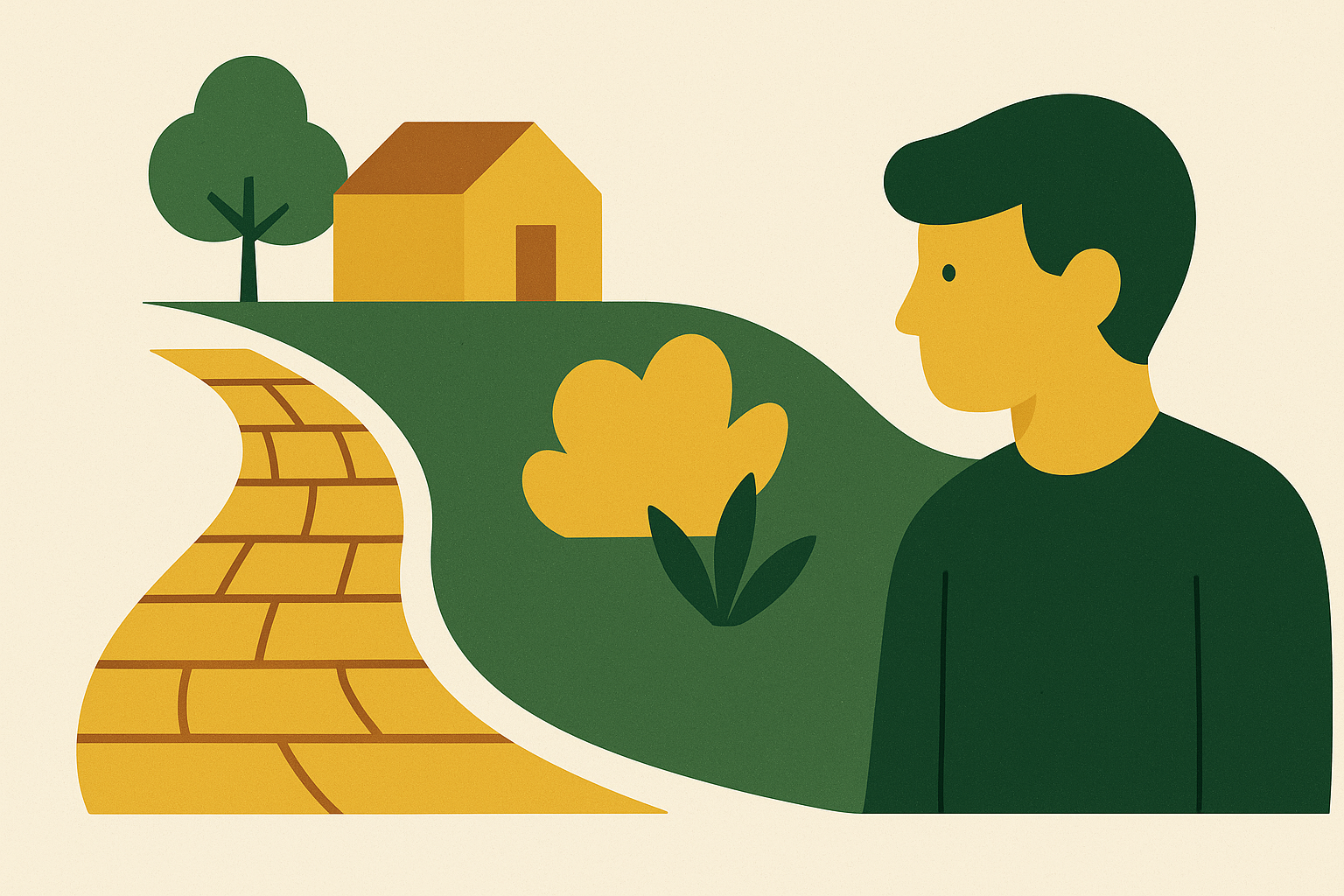
Hardscape and softscape are the two words every landscaping quote is built on, and if a homeowner doesn't know what they mean, they can't tell whether they're buying a low-cost flower bed or a $30,000 drainage system. Hardscape covers the non-living, structural stuff: patios, walkways, driveways, retaining walls, fire pits, pergolas, water features. Built from stone, brick, concrete, and pavers, it's installed, not grown. Softscape is everything alive: grass, plants, trees, shrubs, ground cover. Here's the quick test I give clients on a first walk-through: if it doesn't grow and doesn't need watering, it's hardscape. Neither category outranks the other. They're just different scopes of work, with different materials, different trades, and completely different cost logic, and a buyer who understands the split walks into a proposal conversation able to actually evaluate what they're being quoted.
How hardscape functions as the structural backbone of an outdoor space
Hardscape is what creates the "rooms" of a yard. It decides where you sit, where you cook, where you walk, where you park. Take the hardscape away and softscape has nothing to organize around; a planting bed with no patio next to it, no walkway framing it, is just a shapeless patch of green.
The structural role goes beyond looks, too. Retaining walls on a sloped lot are doing real engineering work: managing grade, holding soil in place, controlling erosion. Permeable pavers and dry creek beds route stormwater away from the foundation instead of letting it pool. Walkways and driveways manage how people and cars actually move through a property. None of that is decorative; function comes first, appearance second.
I tell clients to think of it the way you'd think about a house: you frame it before you hang drywall. A yard needs hardscape before it can support planting in any organized way. Once it's installed correctly, it asks very little of you — no watering, no fertilizing, no seasonal replanting, just occasional cleaning. A well-built patio or wall runs 20-plus years before it needs real attention, which is exactly why the upfront price tag is high relative to what you'll spend maintaining it afterward.
What softscape contributes that hardscape alone cannot
Softscape is where the sensory stuff lives: color, texture, shade, fragrance, the visible change of a yard through the seasons. Concrete can't do any of that.
Softscape also does real structural favors for hardscape, which surprises a lot of first-time buyers. Root systems hold soil in place, and an unplanted bed next to a patio can erode in ways that eventually undermine the paving itself. Shade from a mature tree cuts the heat load on a patio surface directly below it; an outdoor kitchen under canopy gets used a lot more than one baking in full sun all August.
The tradeoff here is real, though, and I say this plainly to every client: softscape's beauty comes bundled with ongoing labor. Annuals need full replacement every year. Perennials need pruning and periodic division. What actually thrives depends on your climate, your soil, your sun exposure, your drainage, none of which is optional homework. Weekly or biweekly attention during the growing season isn't a maybe, it's the baseline.
Planters are worth mentioning here because they're the one spot where hardscape and softscape physically overlap. A planter box is built structure holding living material, and you can swap what's growing in it without touching the hardscape underneath. It's a small category, but it's a useful mental model for clients trying to separate the two ideas.
There's also been a real shift toward native and climate-adapted plant choices. Softscape that works with local conditions instead of fighting them cuts down the long-term maintenance load considerably, and more clients are asking for it upfront rather than defaulting to whatever looks good at the nursery.
Why hardscape almost always gets built before softscape, and what breaks when that order is reversed
Hardscape goes in first. Softscape gets designed around it afterward, to fill it, soften it, frame it. This isn't a preference; it's sequencing logic that exists for practical reasons.
Excavators, compactors, concrete trucks: hardscape installation runs on heavy equipment, and that equipment will flatten a planted bed or a new lawn without hesitation. Planting first means paying to plant twice. Grade changes, drainage corrections, wall placement, all of that has to get settled before a single plant goes in the ground, because those decisions determine where soil and root systems can actually go.
Reverse the order and here's what happens. Plants get crushed or ripped out mid-construction. Drainage problems that should've been caught early only show up after the softscape is in, which means digging back through finished beds to fix them. A retaining wall gets positioned in a spot that conflicts with a tree's root system nobody accounted for.
So when a contractor proposes hardscape in year one and softscape in year two, that's not a sales tactic dressed up as advice. It's correct project logic, and it happens to double as good news for budget-conscious buyers: because the two scopes are genuinely separable, you can build the structural layer now and add the living layer whenever the budget allows.
What hardscape and softscape each cost, and why the numbers land where they do
Hardscape's upfront cost is high because the work is skilled, the materials are heavy, and the installation is often engineered, not just placed. A paver patio installed runs $18 to $45 per square foot in 2025; materials alone, if you're doing it yourself, run $8 to $16 per square foot. That gap is base prep, edge restraint, labor, and drainage work, the stuff that decides whether the patio is still flat and intact in year 15 or heaving and cracked by year five.
Retaining walls follow the same pattern. Materials run $20 to $45 per linear foot; installed, you're looking at $60 to $120 per linear foot. The premium is the structural engineering and drainage behind the wall, the part that determines whether it holds soil correctly for decades or fails in year three.
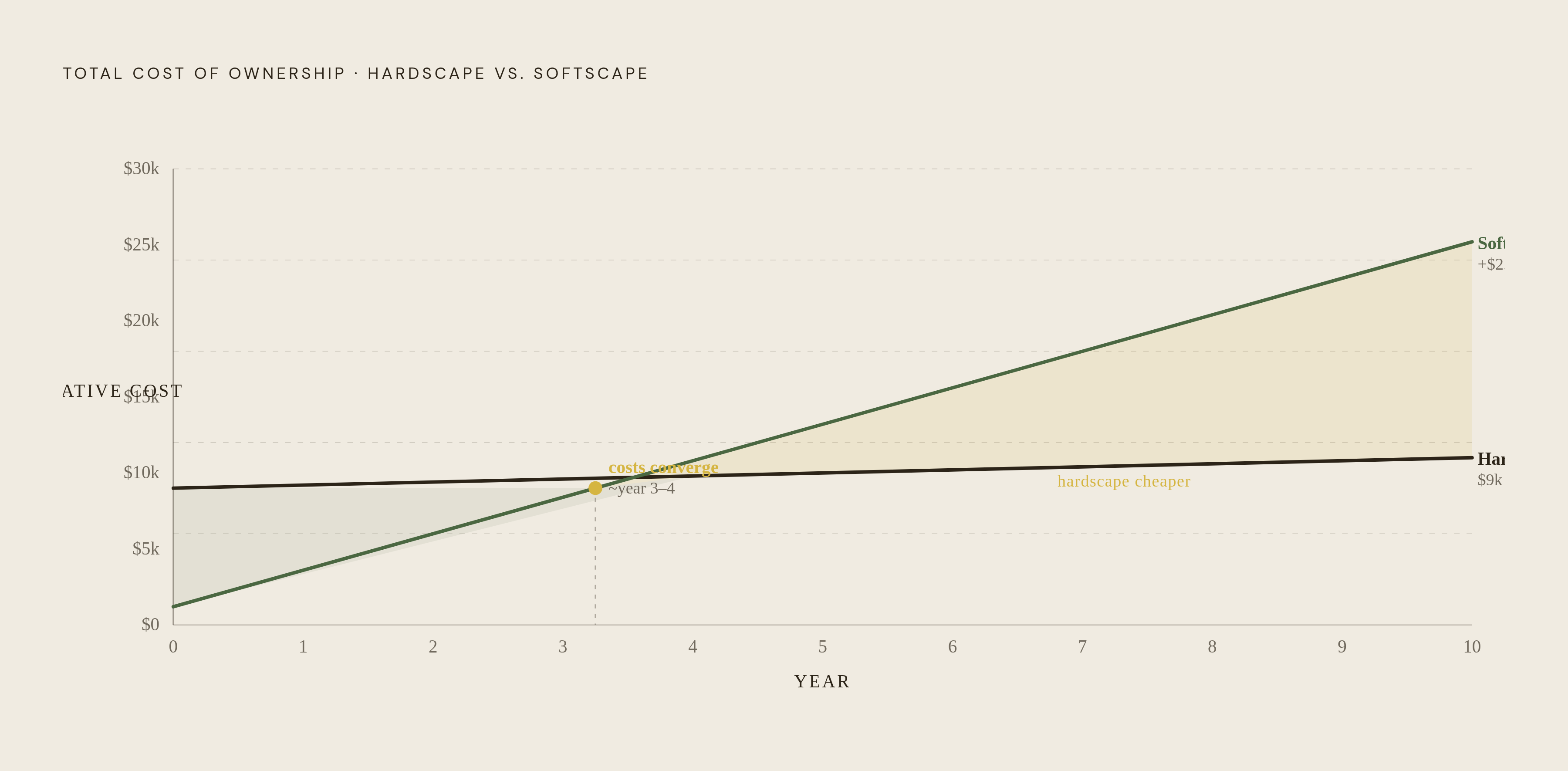
Zoom out and a full hardscape project typically lands somewhere between $2,000 and $30,000 depending on scope, with median spend sitting around $9,000. Labor runs $50 to $100 an hour, and on a mid-size project total labor often adds up to $2,000 to $10,000 on its own.
Softscape flips the cost curve. Cheaper going in, it recurs instead of ending. Annual plantings need annual replacement. Irrigation, seasonal cleanup, fertilization, these are ongoing line items, not one-time purchases. So the honest way to frame it for a client: hardscape is high upfront, low lifetime cost; softscape is low upfront, recurring annual cost. Run the comparison out five to ten years and the total-cost-of-ownership gap narrows a lot more than the sticker prices suggest. Surfacing that math before a client asks for it tends to prevent the sticker shock that kills deals, and it makes an appropriately scoped project a lot easier to approve.
How hardscape holds and builds home value, and what that means for a buyer's decision
Professional landscape design, anchored by hardscape, can raise home value by 5 to 12% according to McLeod Landscaping, and industry sources such as Landscaping Lancaster PA put well-executed hardscaping as high as 15 to 20%. Those are wide ranges, but they point the same direction.
Break it down by project and the numbers get more specific. Decks recoup roughly 72% of cost at resale; patios often clear 80%. Fire pits, which typically run $300 to $1,400 to build, return 67 to 80%. Outdoor kitchens are the big-ticket item, $22,000 to $100,000, with an estimated 55% return, still meaningful equity given the scale of the build. Patios overall land in the 55 to 70% range depending on material and design complexity.
What a buyer is actually purchasing with hardscape is less weekend maintenance, more usable square footage, and a property that reads as finished rather than half-done to the next buyer who walks through. Softscape's contribution to value is real, mature plantings genuinely help curb appeal, but it's less predictable. Overgrown or dated plantings can just as easily read as a liability as an asset.
Connecting a specific project to a specific return turns the conversation into a business decision instead of a purely aesthetic one. That reframe can turn an aesthetic conversation into a straightforward business decision.
Common scope confusion points and how a clear hardscape/softscape distinction prevents them
Here's the most common breakdown I see: a homeowner says "landscaping" and pictures a finished yard. The contractor hears an ambiguous word that could mean $3,000 of mulch and shrubs or $30,000 of drainage and structural work. Neither side is wrong, they're just speaking different languages.
That gap shows up later as complaints nobody wants to have. "I thought the plants were included" means the buyer assumed softscape was bundled into a hardscape quote. "I didn't realize there would be that much disruption" means nobody explained that hardscape installation involves excavation, not just placement. "Why is there a separate quote for the wall?" means the buyer never understood that a retaining wall is structural hardscape, not a landscaping add-on.
Teaching this distinction early does three things at once. It positions the contractor as someone who actually knows the trade, not just someone reading off a price sheet. It lets the buyer figure out for themselves which scope they're ready to commit to right now. And it builds a shared vocabulary that makes change orders and future scope additions much easier to explain, instead of relitigating definitions every time something gets added.
A habit worth building into every first site visit: walk the property with the client and name things out loud as you go, this is hardscape, this is softscape. It anchors the categories in their own yard instead of leaving them as abstract terms. Once the categories are clear, phasing becomes an easy, professional sentence to say: "we're quoting the hardscape phase today; softscape is a separate scope we can plan together once this is done." Contractors who do this education work before the formal proposal even goes out tend to see less price haggling later, because the buyer already understands what they're paying for and why. Quoting and proposal tools that let contractors present hardscape and softscape as distinct, clearly priced line items, rather than one blended number, make that clarity a lot easier to deliver consistently and cut down on the back-and-forth that stalls a decision.