The Retired Homeowner as a Hardscape Buyer
Retired homeowners have the equity and time to finally build the backyard they've imagined.
Retired homeowners are the buyer hardscape contractors keep underselling. They've got the equity, the paid-off home, and, frankly, the time to finally build the backyard they've been picturing for a decade. Roughly eight in ten Baby Boomers own their homes, a rate well above younger generations, and most of them sit in single-family properties, which is the physical starting point for nearly every patio, outdoor kitchen, or fire feature a contractor sells. Add record housing wealth among owners 62 and older as of Q3 2025, and you get a buyer with money, space, and zero mortgage anxiety standing between them and the project.
This isn't someone flipping a house in three years and chasing resale numbers. They're staying put, and that one fact should change how a contractor talks to them from the first phone call.
What retired homeowners actually want out of their backyard
Aging in place drives almost everything here. Most older adults want to stay in the home they've already raised a family in, and they're willing to spend to make that happen. Retirement doesn't mean sitting on the porch either; close to a fifth of Americans over 65 are still working. This is an active homeowner, and the yard has to keep pace with that.
The industry spent two decades fixing accessibility indoors: grab bars, walk-in showers, zero-threshold doorways. The backyard is next in line. I hear the same three things from this buyer, over and over:
- Pride in the property, wanting it to look finished rather than half-done
- Space for hosting, because the empty nest fills back up every holiday and every grandkid visit
- A livable outdoor room, not a decorative add-on: outdoor kitchens and covered patios function like square footage
Nobody says "accessibility" out loud, but it's baked into every request. Smooth paver surfaces instead of uneven flagstone. Gentle grade transitions instead of a step down. Materials that don't need babysitting every spring. And here's the thing contractors miss constantly: this person has been mentally designing the project for years already. They don't need convincing. They need someone to confirm the plan is sound and then build it right.
How retired buyers pay for this, and why paid-off equity changes the whole pitch
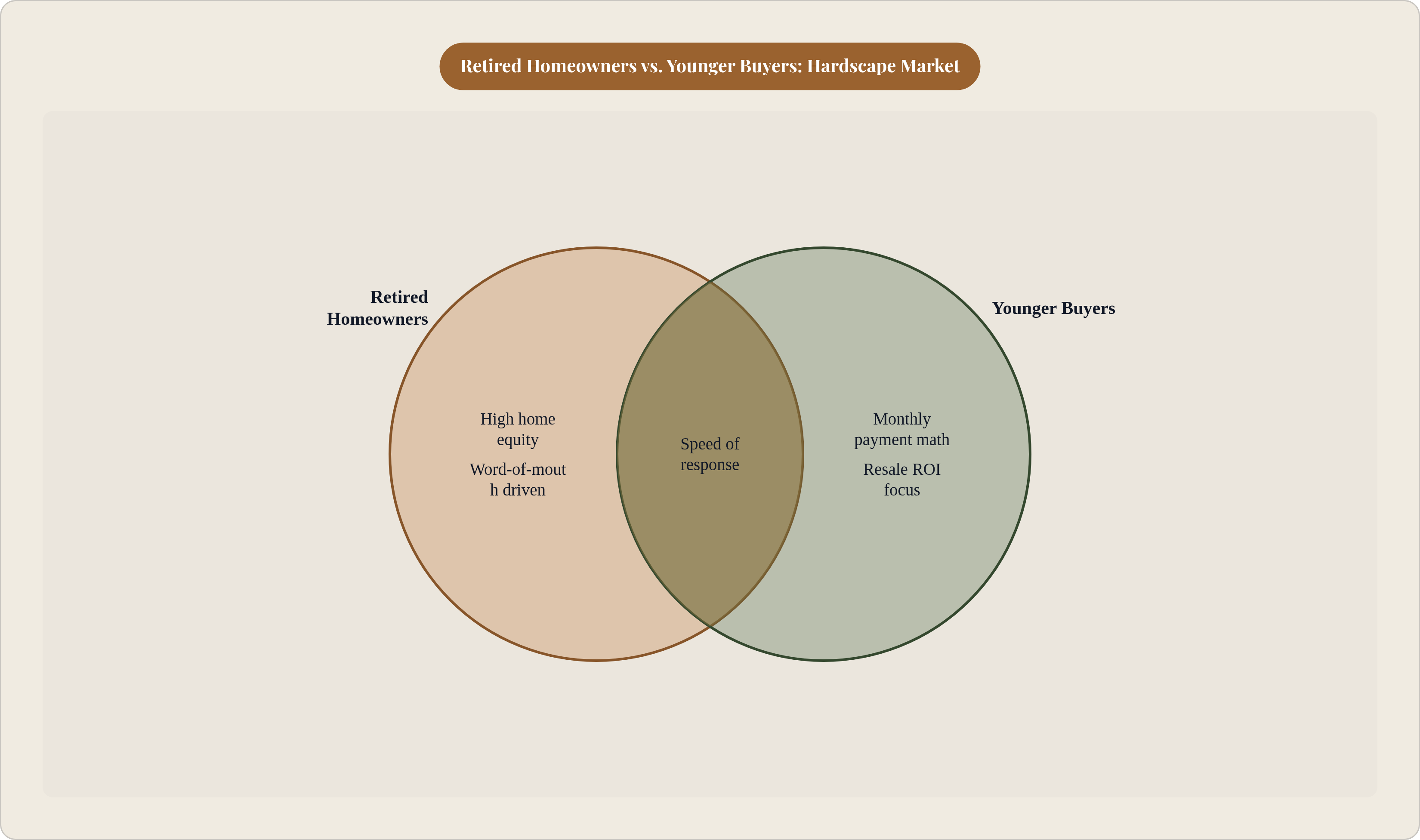
A 35-year-old financing a patio is doing math on monthly payments. A 68-year-old is asking a completely different question: should the money sitting in the house finally go toward living in it better? Lower debt, deeper savings, record home equity. That combination changes the financial conversation from the first sentence.
Boomers and the Silent Generation outspend every other generation on home improvement, specifically the discretionary upgrade category hardscape lives in, separate from repairs and routine maintenance. Spending among older households has grown faster than the household average overall. The money is moving toward this group, not away from it.
There's a time pressure here too, though it doesn't feel the same as a younger buyer's urgency. A 30-year-old can shelve a backyard remodel for two years without losing much. A 75-year-old feels that delay differently, because every year deferred is a year of use they don't get back. That urgency is real. It's not a sales tactic I'm inventing. With concrete and paver costs still trending up, telling this buyer "the price only goes one direction from here" happens to be true.
The projects this buyer chases, and what they're willing to spend
Outdoor kitchens are the clearest proof of this group's buying power. It's a multibillion-dollar category, growing fast, and Boomers get named directly as one of the main drivers. Plenty of these projects run past $20,000, and a real chunk clear $30,000. Budgets stretch here instead of shrinking.
Around the kitchen sits the rest of the scope: paver patios, fire features, lighting. Full-project averages from sources like techo-bloc.com show scopes stacking up well past individual line items once the kitchen, patio, and lighting all get bundled into one job. Give this buyer the means, and the vision expands on its own.
ROI language works here too, and it's not a stretch. Industry data backs strong cost recovery on landscape upgrades broadly and outdoor kitchens specifically, and curb appeal is widely cited as a meaningful factor for future buyers. For someone aging in place but still thinking about eventual estate value, that's genuine reassurance, not a sales line.
Boomers also rank as the top generational segment for lawn and garden spending overall. The habit of investing in the outdoor space already exists. Hardscape is just the bigger-ticket version of something they were already doing.
How this buyer researches, decides, and picks who to hire
Retired homeowners take their time. They ask more questions, they compare more bids, and they will not sign on the first call. But once trust locks in, close rates run high; this is a deliberate buyer, not an impulsive one.
Most homeowners taking on outdoor renovations hire a professional instead of DIYing it, with landscape contractors, paver specialists, and general contractors all serving this market. Hardscape specifically isn't a weekend project. The physical labor and permanence of the work pushes even the handiest retiree toward hiring out.
Word of mouth carries more weight here than almost any channel a contractor pays for. Retired homeowners spend more time at home, they notice what the neighbor did last spring, and a personal referral beats an ad every single time. Online reviews still matter, but this buyer reads them differently. They read the whole review, not just the star count, and they pay close attention to how a contractor responded to a bad one, because that response tells them how problems get handled once the deposit is in hand. A portfolio of similar homes in similar neighborhoods carries real weight; a generic gallery of unrelated projects does not.
Speed still counts. Roughly half of all service sales go to whoever responds first, and a retired buyer isn't going to sit around waiting on a callback. A slow reply doesn't read as patience, it reads as disorganization. Above everything else, this buyer expects to be treated like the capable adult they are: no condescension, no pressure, just a real partner walking through a big decision with them.
What the sales conversation actually needs to sound like
The first consultation is where trust gets built or lost, full stop. Show up on time, bring real photos of real jobs, and listen before pitching anything.
Lead with what the space will feel like, not what it's made of. "You'll host your grandkids here every summer" beats a rundown of paver specs and polymeric sand joints every time. Specificity about the life the project enables closes faster than any materials list.
Get ahead of the objections before they surface. Retired homeowners will be home during construction, so they want to know exactly how disruptive it'll be and for how long. They want the work to hold up in twenty years, not five. They care more about a clear contract, milestone updates, and follow-through after the job than they do about shaving a discount off the total.
ROI framing belongs here too, but as quiet reassurance, not a hard close. Honest talk about rising material costs adds real urgency without any pressure attached to it. And scope grows naturally in a consultative conversation: ask the right questions, and a retired buyer with the budget adds the fire feature or the lighting package on their own. Push it, and they close the wallet instead.
Keep talking after the check clears, too. This buyer refers people just like them, and a satisfied retired homeowner's referral tends to land on exactly the kind of client a contractor wants next.
Where AI and automation fit, without losing the personal touch this buyer demands
Here's the structural problem: retired buyers research thoroughly and usually reach out to several contractors at once. Whoever responds first with something substantial wins a disproportionate share of that business.
AI-driven inbound response solves the timing half of that problem. A homeowner researching patios at 9 PM gets a real, professional reply right away instead of waiting until Monday to feel acknowledged. Automated follow-up across text, email, and voicemail keeps a slow-to-respond lead warm without a coordinator tracking it by hand on a spreadsheet somewhere.
Quoting automation matters especially with this buyer, because they want detail they can sit with. A self-serve quote tool or an AI-assisted estimate gives a deliberate buyer something concrete to study on their own schedule, which is exactly how they prefer to decide things. Estimating tools built on AI save contractors real hours each month on quoting alone, hours that flow straight back into the consultations where trust actually gets built.
Scheduling and CRM automation close the other gap: the missed callback, the lost note, the follow-up that never happened. Those dropped-ball moments cost the most with a buyer who's watching closely for any sign of disorganization.
None of this replaces the relationship. It protects it. When the routine work runs on systems, the contractor shows up prepared and present for the conversations that actually decide whether the deal happens. When this stack is built well, lead response, quoting, follow-up, and back-office work run on systems, so the crew's attention stays on the parts of the job no software should ever touch.