What Homeowners Are Really Asking When They Search "Hardscaping Near Me"
Homeowners searching "hardscaping near me" want proof you're trustworthy and local.
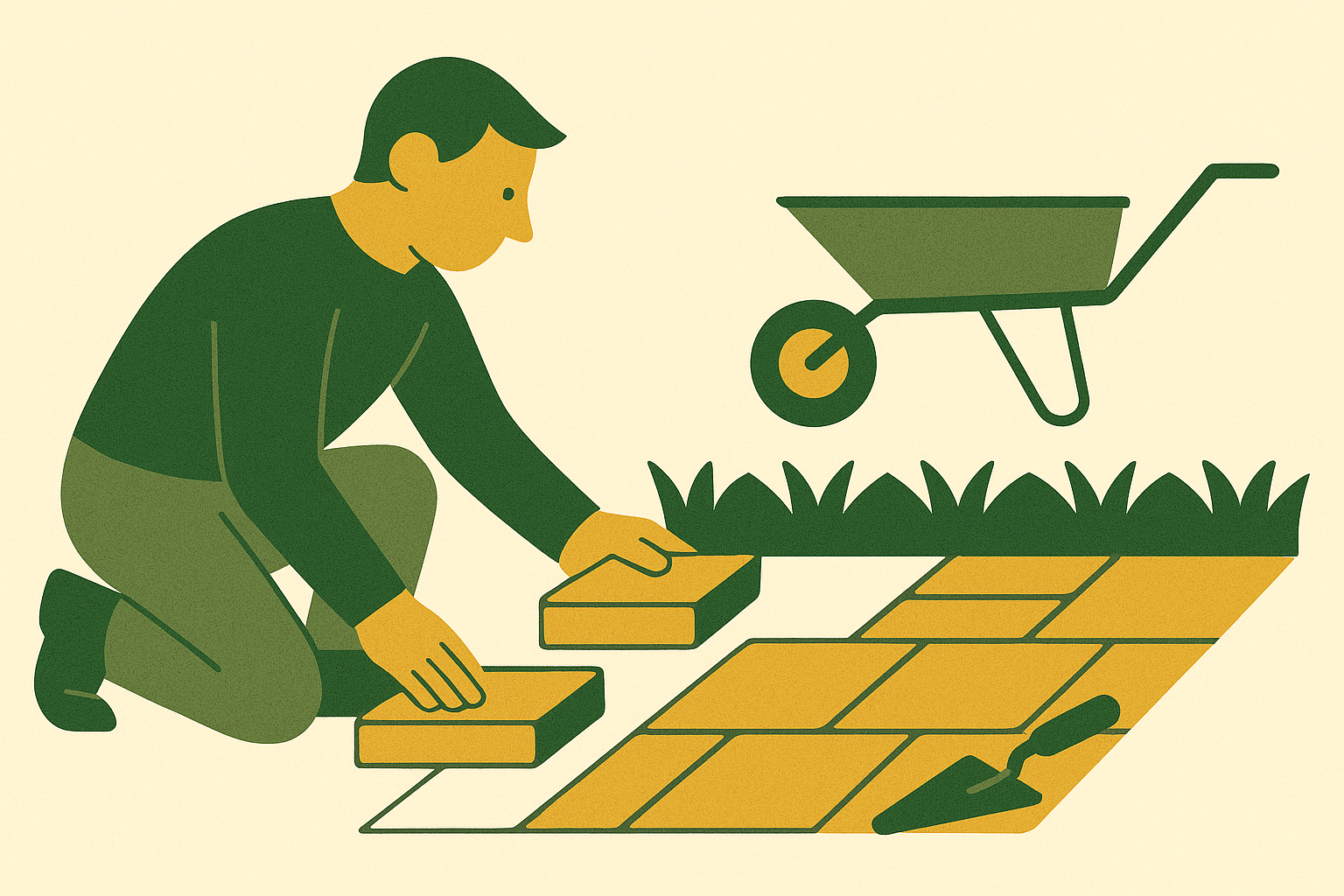
I've laid pavers for eighteen years, and I still watch good contractors lose jobs they should've won. Someone types "hardscaping near me" into Google and they've already decided: they want a patio, a wall, an outdoor kitchen, and they want it from someone close enough to hold accountable. What happens in the next ten minutes on that person's phone decides who gets the job, and most contractors have no idea that clock is even running.
The outdoor living shift that made this search so common
Outdoor space stopped being a bonus room a few years back. Oldcastle APG's VP of Design has said outdoor living now beats kitchen renovations as the most requested feature in new and remodeled homes. I felt that shift on job sites before I read it in a report. People stopped asking for "a patio" and started asking for a dining area, a fire pit lounge, a kitchen that can feed twelve people on a Saturday night.
Blame the pandemic if you want a clean cause. It pushed people to treat their homes as office, gym, restaurant, vacation spot, all at once, and that habit never really left. The backyard became a room. People plan it with the same seriousness they'd bring to a kitchen remodel, and the checkbook to match.
I've sorted the leads that come through my own site into three rough buckets, and they don't behave the same way. The practical backyard upgrader has a cracked patio or a yard that made sense for the 2005 owners but not the family living there now. The retired homeowner has time and equity and finally decided to enjoy the property instead of just mowing it. The new-home or inherited-home owner wants the yard to catch up to the rest of a place that already feels finished.
Answer all three with the same script and you'll lose at least two of them. The family hosting a graduation party in six weeks moves at a different speed than the retiree who's been thinking about this for three years. Treat urgency as one-size-fits-all and the homeowner feels like a number before you've said a word.
The financial question the homeowner isn't asking out loud
Sticker shock lands first. Most people searching "hardscaping near me" have no idea what a fair number looks like for their specific yard, so they brace for the worst before a single quote shows up in their inbox.
Underneath that sits a quieter worry: does this actually add value, or am I lighting cash on fire? Patios, kitchens, and retaining walls tend to return real money at resale, but almost nobody knows that walking in. They're not running a spreadsheet. They're asking themselves, in plain terms, can I justify this.
I learned this the hard way early in my career: hide your pricing and people assume the worst. "Call for a quote" reads as "the number's going to hurt." Contractors who post even a rough range, "patios run $18 to $32 per square foot depending on material," take the fear out of the room before the phone even rings. Part of the anxiety is about whether they have the money. A bigger part is about whether they can trust the number to be honest and the finished product to match the photo they clicked on.
Lead with what the project gives back. The cost conversation goes easier once value's already on the table.
The trust gap that sits behind every local contractor search
"Near me" carries a second meaning beyond miles: it's about who's still around when the retaining wall settles wrong or the paver joints start weeding out in year two.
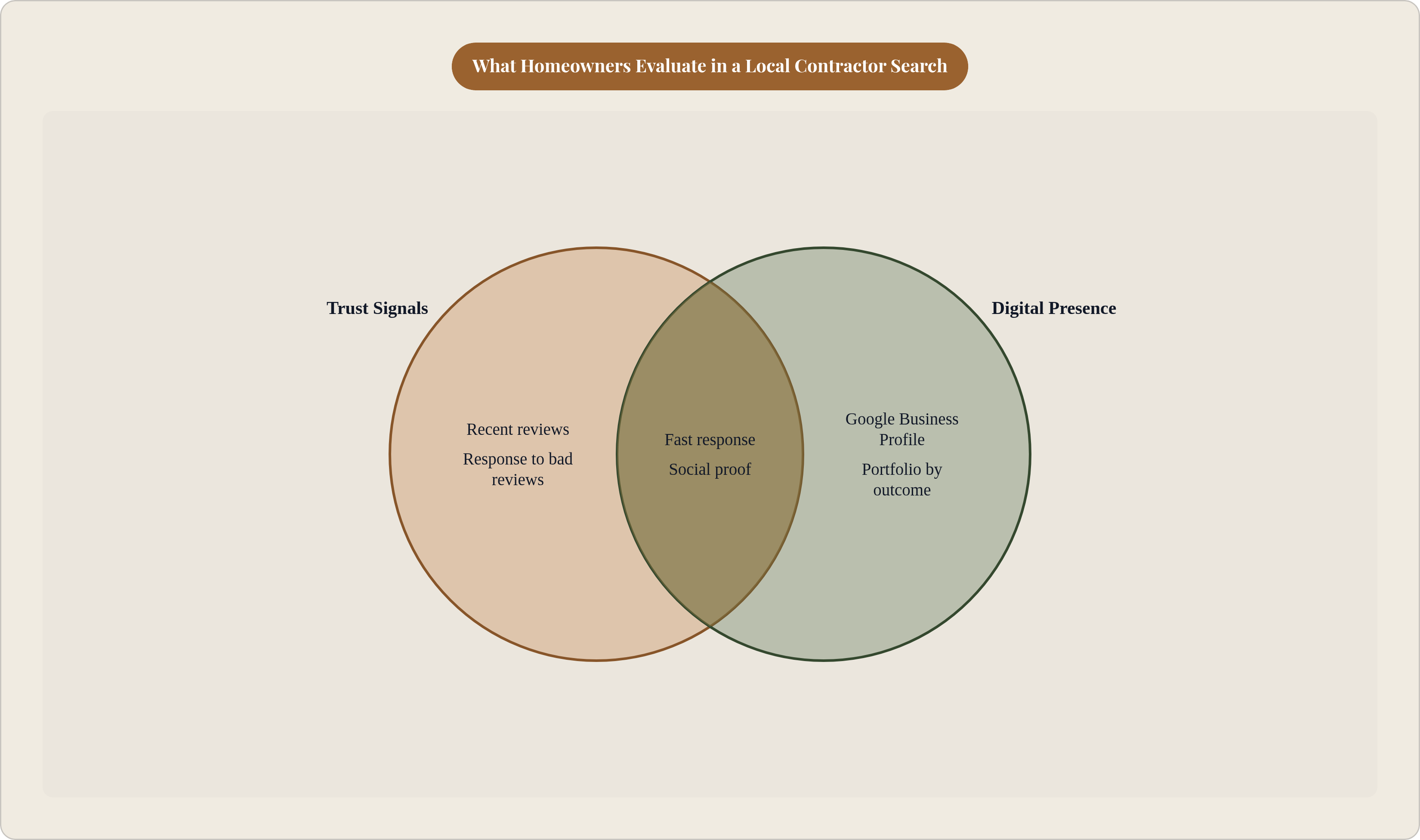
I've watched homeowners check four or five websites before calling anyone, and at that stage they're running something closer to a trust audit than a feature comparison. Reviews carry most of that weight now; they're word-of-mouth at scale. A contractor with 150 recent, detailed reviews at 4.7 stars beats a sharper craftsman sitting on twenty reviews from 2019, every single time. That's not fair to the better mason. It's just how the decision gets made.
Inside those reviews, people are checking for the same handful of things. Did the crew show up when they said they would? Did anyone actually pick up the phone during the job? Did the finished patio look like the one in the estimate? And when something went sideways, because something always goes at least a little sideways on a hardscaping job, how did the contractor handle it?
Recency beats volume. Two hundred reviews from three years back reads as dormant. Thirty reviews from the past six months reads as busy, current, in demand. Trust drops fast once the newest review has dust on it.
The response to a bad review matters almost as much as the review itself. Get defensive, and you've chased off the next five leads who read it. Answer calmly, name the specific fix, and you can win that trust right back.
Most people who search and never call anyone aren't walking away over price alone. Often they just never saw enough proof to feel safe handing a stranger their backyard and a deposit check.
What the homeowner is actually picturing when they search
By the time someone types "hardscaping near me," they've already burned an evening or two on Pinterest or Houzz. They've got a picture in their head, and it's specific: a certain stone color, string lights over a dining table, a layout they saved three months ago and never forgot.
Most of these projects come from wanting to entertain, wanting more usable space, wanting something that looks good, more than from basic upkeep. And the trends shaping that mental picture right now are consistent enough that I'd bet money on them showing up in your next five consultations.
Homeowners want zones now, not one big slab: a dining area here, a fire pit lounge there, maybe a separate outdoor kitchen tucked to the side. Large-format pavers are winning jobs, partly for the look, partly because fewer joints means less weeding later. Integrated lighting and smart irrigation used to be upsells; now people expect them in the base quote. And permeable materials keep coming up, especially from homeowners fighting drainage problems or just trying to lower their footprint.
Say "we do patios" and that whole picture deflates in one sentence. Organize your portfolio around outcomes instead, entertaining spaces, low-maintenance yards, backyard retreats, and you're speaking the homeowner's language instead of the trade's. Reflect their vision back to them on the first call, before the tape measure comes out, and you've shown more competence than any pitch could.
How the contractor's digital presence answers — or fails to answer — those unspoken questions
Here's the real sequence: search, scan results, click into two or three sites, form an opinion in under a minute, then call or quietly disappear. That minute decides everything.
A contractor's website needs to answer a short list of questions fast, without making anyone dig for it. Where do you actually work, so the "near me" question gets settled before it's asked out loud? Do the project photos match what I've been picturing, clean lines, spaces built for entertaining? Roughly what does something like mine cost, even as a range? Do other people trust you, meaning review count, star rating, a couple of specific quotes that speak to the worries above? And how do I take the next step, ideally something I can tap in five seconds, not a contact form buried three clicks deep?
Your Google Business Profile carries as much weight as the website. Categories, photos, the Q&A section, how recent the reviews are, all of it decides whether you show up in the map pack at all.
Speed decides more than almost anything else once someone actually reaches out. Text or call back within the hour and you've got a real shot at booking the job. Wait a day, and odds are they've already hired the guy who called first.
This is where automated response tools have actually changed the math for guys like me who don't have a receptionist. An AI response that acknowledges the inquiry, asks one smart question about the project, and sets a clear expectation for a callback keeps the lead warm while the crew's still out pouring concrete.
Most independent hardscaping contractors have the skill to win these jobs outright. They lose them in the fifteen minutes after someone clicks off their website with no clear next move.
Turning search intent into a signed job before a competitor answers the phone
The contractor who wins this search isn't always the most skilled, and he's rarely the cheapest. He's usually just the one who answers the homeowner's unstated worries fastest.
That window closes quick. Homeowners typically reach out to a small handful of contractors, and whoever responds first and sounds like they know what they're doing sets the bar everyone else gets measured against. The second and third contractor to call back are fighting an uphill battle, even with better work to show for it.
A sequence I've seen work, over and over: respond inside the hour, using an automated acknowledgment if the crew's elbow-deep in a pour and can't grab the phone. Ask one or two questions that show you actually thought about their yard, not a generic scheduling question. Mention a comparable project nearby or in the same budget range; proximity plus proof beats either one alone. Then make the next step small, a fifteen-minute call, not a formal estimate appointment that feels like signing something before you've even met.
The hardscaping trade is big, it's growing, and it's still scattered across thousands of small operators; no single company owns a local market anywhere. That's the opening. A contractor who answers with the speed of a national franchise beats the guy down the street with the same skill and a slower phone, nearly every time.
The homeowner who types "hardscaping near me" already decided to spend the money. The only thing left to settle is which contractor earns enough trust, fast enough, to be the one who actually gets to build it.