Sending Professional Proposals That Win Hardscaping Jobs
A detailed proposal sells confidence, not just materials and labor.

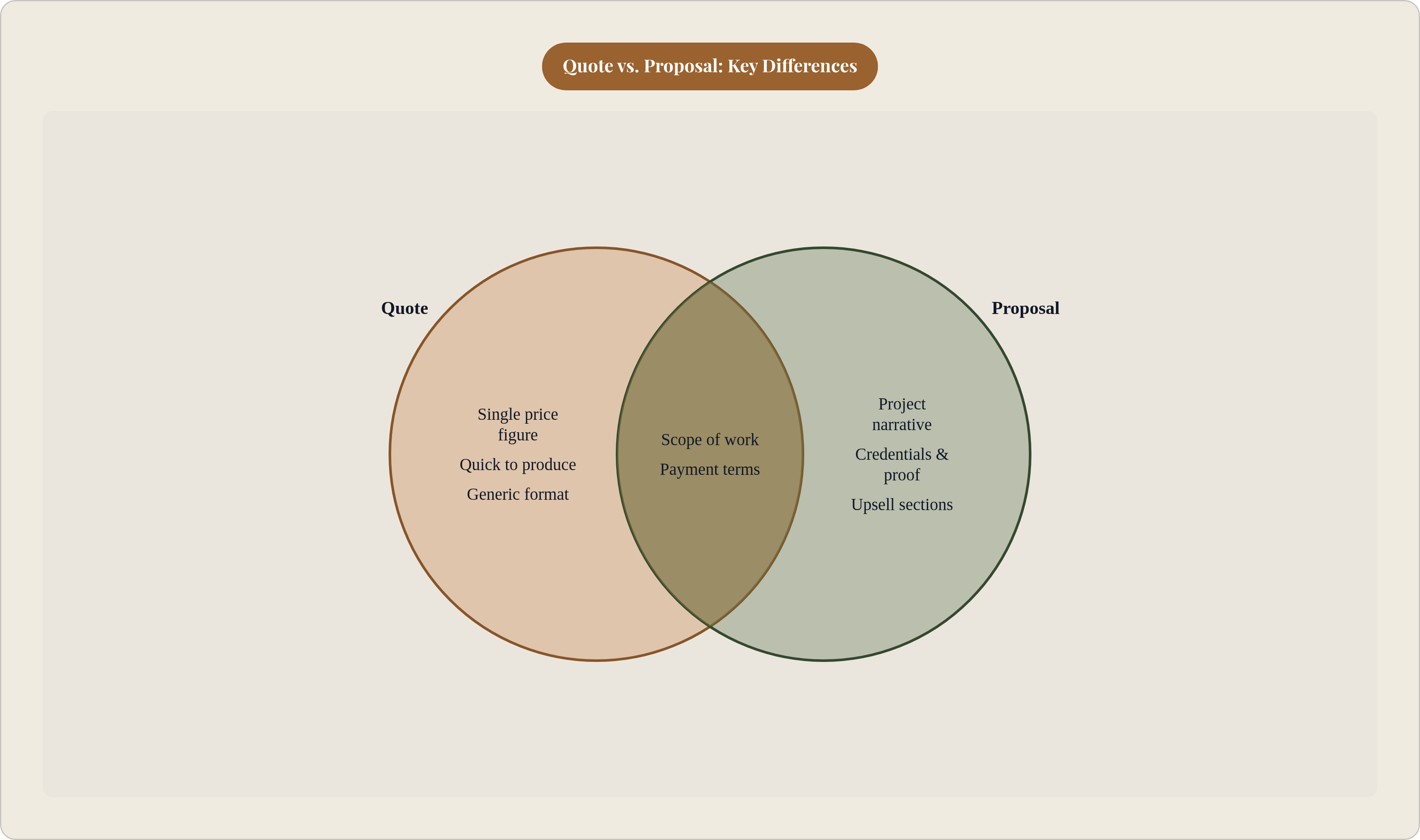
A quote answers one question: how much? A proposal answers three: why this scope, why this contractor, and why now. That distinction is what separates a document that closes the job from one that gets handed to a competing bid as a price-matching tool.
Most contractors send a one-page number or, worse, a verbal estimate and a follow-up text. That gap is where you either win or hand the job to someone else.
A well-built proposal contains a project narrative that reflects the homeowner's goals back to them in their own language; a defined scope that proves you understood the site, not just the square footage; credentials that reduce perceived risk; and pricing that is explained rather than listed. Patios typically run $8,000 to $12,000. Retaining walls often exceed $10,000 and push toward $20,000. At those numbers, homeowners are not buying materials and labor. They are buying confidence. The proposal is where that confidence either takes hold or it doesn't.
The Cover Section: What the Homeowner Reads Before Anything Else
The cover page is the first signal a homeowner gets about whether they are dealing with a legitimate operation or someone who typed a number into a blank document. It does not have to be beautiful. It has to be deliberate.
What belongs there: your company name, logo, license number, and contact information. The homeowner's name and project address. The proposal date and an expiration date. A one- or two-sentence project summary, written in plain language, that reflects what the homeowner actually told you when you were standing in their yard looking at the same thing they were looking at.
Each element does a specific job. The personalization signals that this document was built for this homeowner, not cloned from a folder. The expiration date is a structural tool, not a pressure tactic; it closes the open-ended "I'll think about it" window that lets a competitor close while you wait. The project summary tells the homeowner immediately that you were listening during the site visit, which is not a given and which homeowners notice.
Tone is set here and it carries through everything that follows. Professional, but recognizably human. Every section either sustains that register or quietly undermines it.
Scope of Work: The Section That Eliminates the Most Common Objections
Vague scopes produce anxious homeowners. Anxious homeowners negotiate on price, because price is the only concrete thing they can grab onto when everything else is murky.
Specificity here means materials called out by name and grade, not "pavers" but the specific product line, color blend, and manufacturer. Square footage and dimensions from actual site measurement. Base preparation, drainage, and edging details that describe the invisible work the homeowner is paying for but will never see once the crew leaves. And a clear list of what is explicitly excluded from the scope, with brief reasoning. That exclusion list draws a clean contractual line that prevents scope creep disputes before they start.
I've seen contractors win jobs priced ten percent above competing bids because their scope was specific enough to read like a site survey. They used satellite-derived measurements, named every material, and described every phase of base work. They were not cheaper. They were more credible. The homeowner felt like they knew exactly what they were getting, and that feeling is worth more than a lower number from someone who eyeballed the square footage from the driveway.
Standardized scope templates can cut estimating time and improve accuracy significantly, which matters not just for winning the job but for protecting your margin throughout it. The scope you sell is the scope you have to deliver.
Presenting Price So It Creates Confidence Rather Than Sticker Shock
Price presented without context reads as arbitrary. Price presented after a detailed scope reads as a logical conclusion. The sequence matters more than most contractors acknowledge.
Break the price into line items or phases, not to invite negotiation, but to show the homeowner where the money actually goes. Most clients have no idea how much of a contractor's pricing is invisible to them. Overhead typically accounts for at least 20 percent of total sales, and sustainable pricing requires a 30 to 40 percent markup to generate real profit. None of that should be hidden or apologized for. Line-item transparency is not a concession; it is evidence that your number came from a process, not a guess.
Build a tiered option format into your template: three defined packages, each anchored to the homeowner's goals rather than just material grades. The middle option is the anchor. The top option exists to reframe the middle as the sensible, measured choice. When people see three options instead of one, a significant portion gravitate toward the middle or upper tier. The more important effect is that tiering changes the fundamental decision: the homeowner is no longer choosing between hiring you and not hiring you. They are choosing which package fits them.
Payment milestones belong in this section as well, deposit, mid-project, and completion. They reduce financial anxiety and signal organizational competence before the first shovel touches the ground. And because a large share of home services projects over $5,000 are financed, noting financing availability directly in the proposal removes a quiet objection that many homeowners carry but never say out loud.
The Upsell Section Most Contractors Leave Out of Their Proposals Entirely
Landscape lighting almost sells itself when framed correctly. A homeowner who just committed to a $15,000 patio does not want to watch that investment disappear after dark. When you present lighting as completing what they already bought, rather than as a separate purchase requiring a separate decision, the conversation changes completely.
Put a lighting section in every hardscape proposal, even when the client did not ask for it. Then add the other natural adjacencies: drainage solutions for any patio or retaining wall project, a seasonal maintenance plan for the newly installed hardscape, irrigation if softscape surrounds the design. Present these as an optional section near the bottom of the scope document, not as a separate quote requiring a separate conversation. Keeping the homeowner inside one document preserves momentum. A separate quote requires a separate decision, and separate decisions get deferred, sometimes indefinitely.
The proposal template is where that additional revenue gets built in systematically, not extracted one awkward job-site conversation at a time.
Project Timeline, Milestones, and What They Signal About How You Run a Job
Homeowners fear two things more than price: that the job will run longer than promised, and that they will be left in the dark about what is happening on their own property. A project timeline embedded in the proposal addresses both before the homeowner has to ask.
Include an estimated start date, clearly noted as contingent on a signed agreement and deposit. Phase milestones that correspond to the payment schedule. A completion window, with plain language acknowledging weather-related variability. A simple visual schedule or a short bulleted phase list accomplishes more than a paragraph trying to explain the same information in prose.
When the payment milestones from the pricing section map directly onto the project milestones in this section, the proposal reads as a coherent operational plan rather than separate sections that happened to end up in the same PDF. That coherence communicates something the homeowner cannot fully articulate but absolutely registers: this contractor has run jobs like this before. The process is real. The document reflects an actual operation, not an aspiration.
Credentials, Insurance, and Proof of Work: What Belongs in the Proposal and What to Cut
A large majority of consumers trust online reviews as much as personal recommendations, which is a fact worth knowing. But trust signals you control, embedded directly in the proposal, are more reliable than hoping the homeowner navigates to your Google profile before making a decision. You cannot curate what they find there or when they find it.
What earns its place in this section: one or two specific testimonials from comparable projects. A patio testimonial for a patio bid. A retaining wall testimonial for a retaining wall bid. Specificity is what makes testimonials credible; generic praise gets skimmed and forgotten because the reader's brain correctly identifies it as non-specific and moves on. A before-and-after photo of a similar completed job provides visual proof of outcome rather than process. License number and proof of insurance, included proactively, resolve an unspoken concern many homeowners carry but never actually voice. Relevant certifications, ICPI certification for pavers or manufacturer installer credentials, signal genuine investment in the craft rather than someone who learned on the job and never looked back.
What to cut: company history narratives, staff bios, awards with no bearing on the project being proposed. Everything in this section has one job: answering the homeowner's final unspoken question before they reach the signature line. That question is always some version of, "Can I actually trust these people to show up and do this right?"
The Terms and Conditions Block That Protects Both Sides Without Killing the Close
Missing terms are how disputes begin. Scope creep, change order ambiguity, cancellation policies, warranty boundaries: these need to live in the document the homeowner signed, not in a follow-up email and not in a verbal understanding that dissolves the moment someone's recollection of the conversation diverges from yours.
Plain-language terms that belong in every hardscaping proposal: a change order policy requiring a written addendum before any scope change proceeds; cancellation terms specifying what the deposit covers if the homeowner cancels after materials are ordered; labor warranty and manufacturer material warranty stated separately and never conflated; site access requirements and clear language explaining what happens if the site is not accessible on the agreed start date.
Written plainly, these terms signal confidence, not defensiveness. They communicate that you have done this enough times to know where friction typically appears and have already accounted for it. Keep this section short and scannable. A dense legal block at the end of an otherwise readable, human document undoes everything the preceding sections built, and it makes homeowners feel like they are being handed a trap rather than a plan.
How Fast the Proposal Gets Sent Matters as Much as What It Contains
Research published by MIT and cited by Harvard Business Review found that sales teams contacting leads within five minutes of an initial inquiry were roughly 100 times more likely to qualify those leads than teams waiting 30 minutes or more. During peak season, when a homeowner has called three contractors on the same afternoon, that window is the actual competitive margin, not the scope language, not the credentials section.
The tension is genuine: a thorough, site-specific proposal takes time to build properly. Resolving that tension requires templates, not shortcuts. Pre-built scope blocks for common project types, patios, retaining walls, walkways, fire pit areas, reduce composition time without sacrificing specificity. A price book with current material costs that populates line items automatically eliminates manual calculation errors and the embarrassing follow-up call where you have to revise a number you already sent. Client details pulled from the initial inquiry keep the process efficient and the document personalized simultaneously.
Some hardscaping estimating platforms now combine satellite measurement, a price book, and a branded proposal template into a single workflow. A professional, site-specific proposal that once took an evening to build can be produced in a fraction of that time. That speed is the difference between being the first document on the kitchen counter and being the third.
What Happens After the Proposal Is Sent and How to Follow Up Without Losing the Deal
Most homeowners do not say no explicitly. They go quiet, get busy, and eventually sign with whoever stayed present. A proposal with no follow-up plan returns the decision to inertia, and inertia rarely breaks in your favor.
The follow-up structure that actually works does not feel like pressure. A same-day confirmation, a short text or email acknowledging the proposal was sent and offering to answer questions. A 48-hour check-in that references a specific section of the document, something like "Did you have a chance to look at the base preparation detail in the scope?" rather than a generic "just checking in." A final contact before the proposal's expiration date, which gives that outreach a natural, non-pushy reason to exist rather than making you sound like you are staring at your phone waiting for an answer.
Automated follow-up sequences ensure the conversation continues even when you cannot respond manually, which matters because calls go unanswered constantly and evenings and weekends are when homeowners actually think about these decisions. The expiration date established on the cover page closes the loop: the final follow-up is a reminder tied to a structural element the homeowner implicitly accepted when they received the document.
A contractor who sends a professional, site-specific proposal and follows up with consistency looks exactly like the kind of operation a homeowner wants managing a major project on their property. That impression is not accidental. It is the cumulative result of every decision made in building the document and the process around it.